
How Much Does Flight School Cost?
The cost to become a pilot depends on one thing more than any other: how far you want to go. A private pilot certificate costs far less than the full set of certificates and ratings an airline career requires.
Here is the short answer. Earning a single private pilot certificate runs roughly $18,000 to $24,000 at most schools. Training all the way to a career-ready commercial pilot, with every certificate and rating an airline expects, costs between $96,500 and $120,000 depending on the path you take. At Thrust Flight, that full career path is the Zero Time to Airline program, and the figure is all-inclusive: aircraft rental, instruction, materials, and first-attempt exam fees are bundled into one number.
The rest of this page breaks down the cost of each certificate and rating on its own, so you can see exactly where the money goes whether you are training for one rating or all of them. But it’s important to note that the cost will vary from school to school and from person to person.
Updated June 2026
How Much Money is Flight School in the U.S.?
“How much does flight school cost” is the first question almost everyone asks, because flight training is a real investment. The honest answer is that it varies, and it varies for reasons you can actually control once you understand them.
Two factors drive most of the cost: how many flight hours you need, and how much instruction time you use to get there.
Train consistently, study between lessons, and fly somewhere with reliable weather, and you reach each standard in fewer hours.
Train sporadically, and the hours and cost add up quickly.
If you want a career, the most predictable path is an all-inclusive program where the total is fixed up front. If you only want a single certificate, you will pay per rating, and the table below shows what each one costs on its own.
Is There Financing for Flight Training?
Flight training cost is significant, and most career students finance it. Thrust Flight works with three lending partners so you can compare options: Sallie Mae®, Climb Credit, and Stratus Financial.
Most students who enroll in the full Zero Time to Airline program finance the entire cost through one of these partners.
Financing for a single rating is more limited than financing for a full professional program, so if you are pursuing a career, talk with an advisor about which lender fits your situation.
Speak with an Admissions Advisor
Ready to begin your professional pilot program? Click the button below to get in touch with one of our friendly admissions advisors who will walk you through every step you need to take to launch your new career.
Why Does the Cost of Pilot Training Vary?
The cost of pilot training varies mainly because of four things: aircraft rental hours, flight instructor time, supplies and materials, and exam fees.
Your total flight training cost is driven most by the first two, which are billed by the hour, so the number of hours you need is what moves the figure most. Here is how each one works.
Aircraft Rental
Aircraft rates are billed per hour to the nearest tenth. Depending on the school, they may be billed wet, an all-inclusive number including fuel, or dry, where the student will pay for the fuel they use.
Aircraft time is billed based on the Hobbs time recorded from the aircraft, which begins and ends when the engine operates.
The price you pay will vary depending on the type of plane.
Larger, more complex planes cost more to operate and are therefore more expensive. Smaller planes provide a better value since they can be rented for less money.
Flight Instructor Time
Flight instruction time is billed hourly, as well.
You’ll pay for instruction time while you are in the aircraft receiving training, as well as for any ground instruction you receive before and after the flight.
You’ll also occasionally pay for ground-only instruction to help you prepare for exams or checkrides.
Supplies and Materials
One of the most overlooked aspects of pilot license cost is the additional supplies and materials. Every certificate or rating will require new textbooks, charts, and supplies.
When you first start, you’ll need to buy some pilot gear, but that should last you for many years to come.
| Flight Training Supplies | Cost Estimate |
|---|---|
| Headset | $400-$1,000 |
| Kneeboard | $20-$40 |
| iPad | $400-$600 |
| Flight Computer | $30-$80 |
| Pilot Bag | $70-$150 |
| Fuel Tester | $10-$20 |
In the Zero Time to Airline program these supplies are included in the cost of your program.
Cost of Pilot Exams
Among the often overlooked flight school fees is the written exam and FAA practical exam.
Written Exam
When you take a written exam, you have to pay a fee to the FAA testing center. The fee is usually around $150, but it varies by location and type of exam.
FAA Practical Exam
When you do your check ride with a designated pilot examiner (DPE), they’ll charge for their time. Costs vary considerably depending on the type of checkride and your region.
Most schools don’t include these in the cost of flight training (but they are included in the Zero Time to Airline program).
Each FAA practical exam is between $900 and $1,500 in most areas.
How Much Does a Private Pilot License Cost?
Plan to spend anywhere from $19,000 to $27,000 to earn your private pilot certificate. The private pilot certificate has the largest cost range.
The private pilot course consists of three different phases of training. Over the course of your training your pilot license cost will vary.
During the pre-solo phase, you learn what you need to fly the plane safely. That training culminates in your first flight alone around the traffic pattern.
You then move into the cross-country phase of training to learn more about navigation and moving between airports.
The last part of the course is practical exam preparation, where you bring all of these skills together and master them. It culminates in your FAA checkride, a two-part practical exam. You’ll have an oral question and answer session, followed by a flight test in the plane.
The Federal Aviation Regulations (FARs) say that the minimum time you can get a private pilot certificate is 35 hours under Part 141 training or 40 hours under Part 61 (Learn the difference between Part 141 and Part 61). But the national average is closer to 70 hours, indicating that most pilots will take substantially longer than the regulatory minimums.
One other thing that is often overlooked is flyable weather. Some lcoations across the country may have flight schools but weather prevents training for weeks at a time. But when you enroll in flight training at our Mesa campus you get 350+ flying days per year.
So, how much does it cost to get a private pilot license? The minimum private pilot license cost, including 35 hours of flight training, is around $18,000.
Start Your Pilot Career
Have questions about your pilot career? Speak with an admissions advisor today and discover if this is the right path for you.
How Much Does an Instrument Rating Cost?
Plan to spend $21,000 to $26,000 on an instrument rating.
The instrument rating course follows the same general schedule that the private pilot did.
You need to complete a written exam, and many pilots choose to attend a formal ground school to prepare for it. Some people will attend an online instrument ground school. You must complete at least 35 to 40 hours of training, broken into a few phases.
In the end, like the private pilot license, you must pass a practical exam that consists of an oral knowledge test and practical flying skills checkride.
The instrument rating’s minimum total cost, including 21 hours in the G1000-equipped Cessna 172SP and 14 hours of dual in the RedBird full-motion simulator, is around $15,000.
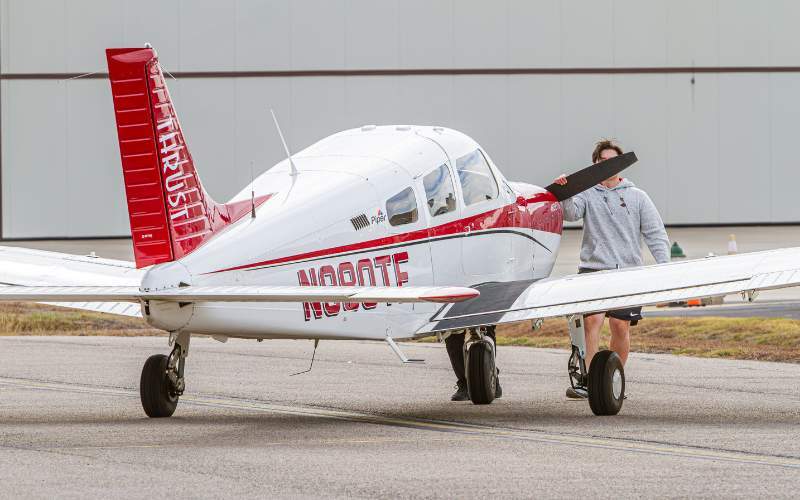
How Much Does a Commercial Pilot License Cost?
Plan to spend $25,000 to $27,000 on your commercial pilot certificate.
The commercial certificate is the one that lets you fly for pay, and the specific training flights required vary, so work closely with your instructor at this stage.
Your final cost depends on how much you have already flown and whether your school runs an accelerated commercial program. Thrust Flight does, which shortens the path.
The exact makeup of the sorts of training flights you need to accomplish to fulfill the regulations vary considerably, so make sure you work closely with a flight instructor when you get to this point.
CPL license cost will also vary based on how much flying you’ve done and if your school has an accelerated commercial program like Thrust Flight.
How Much Does a Multi-Engine Rating Cost?
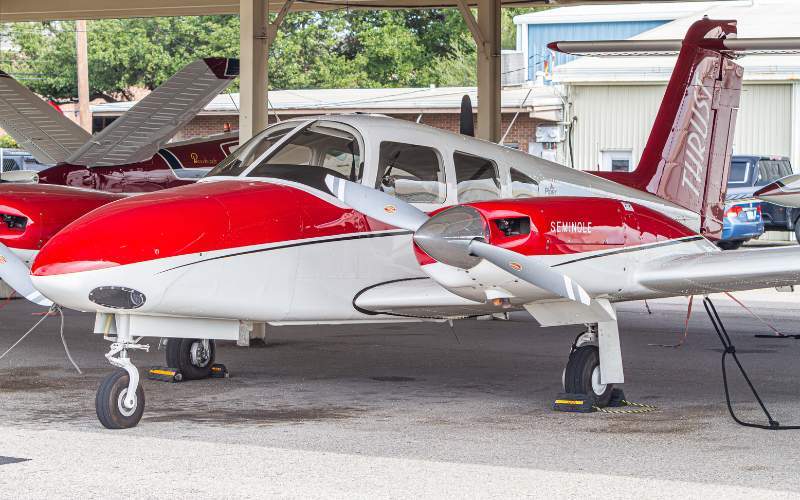
Plan to spend about $10,000 on your multi-engine rating. However, this cost will increase if your multi-engine training includes the full 25 hours required to get hired by a regional airline.
It can be added to a private, commercial, or ATP certificate, and most pilots add it to their commercial.
The training is short: roughly ten hours of dual instruction in a multi-engine airplane and about five hours of ground to cover the new systems and engine-out aerodynamics.
A multi-engine rating can be added to any grade of pilot certificate–private, commercial, or ATP. Most pilots opt to get it as an add-on to their commercial certificate.
The course includes roughly ten hours of dual instruction in a multiengine airplane. Only about five hours of ground instruction is needed to bring you up to speed on the new airplane’s systems and some multiengine aerodynamics.
How Much Does Flight Instructor (CFI) Training Cost?
Plan to spend $6,500 to $8,000 on your CFI training.
The flight instructor course is one that mostly revolves around ground training. There are no new maneuvers or airplane systems to learn, but you will be expected to know the material you have learned well enough to teach it to someone else.
There are two written exams required for the CFI course.
The Fundamentals of Instruction (FOI) is an exam about basic teaching techniques, introductory learner psychology, communication, and how to structure lessons and a curriculum.
The Flight Instructor-Airplane exam looks a lot like the commercial pilot aeronautical knowledge exam. These will cost about $150 each.
The total flight time required is usually around ten hours. You may have to do spin training if you are getting the single-engine airplane rating.
CFI training cost can vary widely. If you’re doing it one-on-one with an instructor it will likely require more time and money over a dedicated CFI academy.
How Much Does an Airline Transport Pilot (ATP) Certificate Cost?
An ATP certificate costs around $6,000 if you pay out of pocket, though many pilots never do, because the airline that hires you often pays for it.
To qualify to become an airline transport pilot (ATP), you must have accrued 1,500 hours of total flying time. Few people pay for all of that time; the ATP is usually a license that working professionals get after they’re already well into their careers.
Remember, there are lots of jobs in the aviation world that only require a commercial pilot license.
The actual cost of getting the ATP isn’t that great because the flight training is pretty simple.
Any pilot who has built up 1,500 flying hours is likely to be reasonably experienced. Most ATP applicants need less than 20 hours of flight training to get themselves ready for the checkride. Pilots who do not do a lot of instrument flying may need a little more time since the ATP is heavily an instrument-flying checkride.
The written exam is another matter. The ATP written is difficult, but most pilots find success with independent study programs and the occasional check-in with their flight instructors.
If you are paying for this expect to spend around $6,000.
However, if you’re becoming an airline pilot you may not need to worry about paying for your ATP certificate because the airline that hires you may pay for you to get it.
Discover your Most Efficient Path to the Airlines
A full time training program will get you to the airlines faster than any other option. See how the Zero Time to Airline program can take you from no experience to airline qualified pilot in as little as 2 years.
Is the Cost of Flight Training Worth It? Weigh It Against the Career
For students pursuing an airline career, the cost is worth it: training costs roughly $96,500 to $115,000, while the median U.S. airline pilot earned $226,600 per year as of May 2024, according to the U.S. Bureau of Labor Statistics.
That means the median pilot earns more than twice the full cost of training every year.
Entry-level pay at regional airlines is lower, and senior captains at major carriers earn well beyond the median, but the trajectory is one of the strongest of any career that does not require a four-year degree.
The right way to judge the cost is not against your bank balance today, but against the decades of earning it opens up.
Frequently Asked Questions About Pilot School Cost
How much does flight school cost?
Flight school costs anywhere from about $18,000 for a single private pilot certificate to between $96,500 and $115,000 for a complete career path with every certificate and rating an airline requires. The total depends on how many ratings you pursue and how many flight hours you need.
How much does it cost to become a pilot?
Becoming a private pilot costs around $18,000 to $20,000. Becoming a career-ready commercial pilot with all required certificates and ratings costs between $96,500 and $115,000 at Thrust Flight through the all-inclusive Zero Time to Airline program.
How much does it cost to become a commercial pilot?
Training to a commercial pilot certificate from zero experience runs roughly $115,000 when bundled into an all-inclusive program that includes the private certificate, instrument rating, commercial certificate, and multi-engine rating. The commercial course on its own costs approximately $27,500.